Home › Concrete Slab Installation
Superior Concrete Cleveland installs level, reinforced concrete slabs for garages, sheds, additions, and patios in Cleveland, OH. We handle site prep, forms, reinforcement, and finishing so your slab is ready for framing or equipment. Proper thickness, base, and joints help prevent cracking and settlement issues.
Superior Concrete Cleveland provides professional concrete slab throughout Cleveland, OH, Ohio and the surrounding area. Our licensed, insured crew delivers safe, clean, on-time work with a free estimate before anything begins. Call (216) 677-5617 or request your free quote.
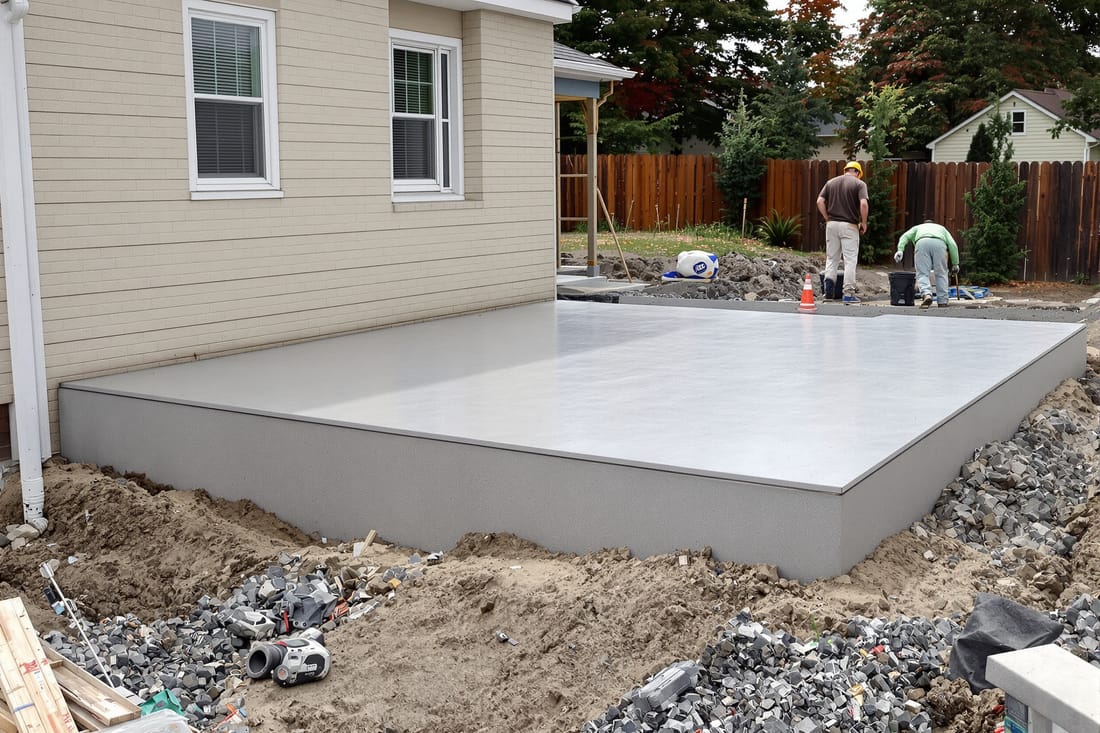
Concrete Slab Installation for Cleveland Homes and Businesses
Concrete slabs are the foundation for many projects in Cleveland, from garage floors in Old Brooklyn to patio slabs in Lakewood and interior basement floors in century homes in Ohio City. Superior Concrete Cleveland focuses on slabs that hold up to our freeze-thaw cycles, lake-effect moisture, and older clay soils, not just something that looks good on day one.
When you call us about a concrete slab, we start with how you actually plan to use it. A driveway extension that will see pickup trucks and work vans needs different thickness and reinforcement than a simple backyard shed pad. A basement or interior slab in a 1920s house in Cleveland Heights needs a different approach than a new build in a newer subdivision in Strongsville. We match slab thickness, concrete mix, reinforcement, and control joint layout to the actual loads and conditions on your property.
We also look at site access and what is already there. Many Cleveland properties have tight side yards, shared driveways, and existing masonry or stone foundations. Our crews measure clearances for our equipment, check how water currently flows across your yard or driveway, and note nearby structures so new slab work does not push water toward your neighbor or your own basement. By the time we hand you a written estimate, we already have a clear plan for demolition, excavation, forming, and pouring that fits your lot and your use.
How We Install a Concrete Slab Step by Step
A solid concrete slab starts below the surface. For most residential slabs in Cleveland, Superior Concrete Cleveland excavates 6 to 12 inches, sometimes more if we hit soft or organic material. Old fill, cinders, or broken brick are common around older houses here, and we remove that until we get to undisturbed or compactable soil. If the soil is soft or holds water, we add a thicker base and sometimes underdrain where needed.
We install a compacted base layer, usually crushed limestone or a similar aggregate that drains well. It is spread in lifts and mechanically compacted so the slab has even support and does not settle in random spots. On interior or basement slabs, we often add a vapor barrier over the base to help control ground moisture, which is important in damp Cleveland basements.
Next we set forms using straight lumber or metal formwork, braced so they do not move when the concrete is poured. At this stage we verify elevations with a level or laser so finished slab height works with existing doors, steps, and driveways. This is especially important on older houses where floors are not perfectly level and we need to transition smoothly to what is already there.
Reinforcement comes next. For most slabs we use welded wire mesh or deformed rebar, supported on chairs so the steel ends up in the middle of the slab, not on the bottom. On driveways, garage slabs, and heavy-use pads we often recommend #4 rebar in a grid pattern aligned with control joints. For patios or shed slabs we may use wire mesh if the loads are lighter, unless soil or drainage conditions call for more strength.
We then pour concrete from a ready-mix truck, using a mix design suited to the project and weather. In cold Cleveland temperatures we may use an accelerated mix and warm water, and in hot summer weather we plan pours earlier in the day to manage set time. The crew places the concrete, consolidates it to remove air pockets, and screeds it to the correct elevation. We float and trowel the surface to the finish you choose, then saw or tool control joints at the correct spacing to manage cracking as the slab naturally shrinks while curing.
Concrete Mixes, Thickness, and Options That Affect Cost
Concrete slab pricing in the Cleveland area is not one-size-fits-all. Superior Concrete Cleveland walks you through the main choices that affect cost so you understand where your money goes. The first factor is slab thickness. A typical patio or walk slab is often 4 inches thick, while a garage, driveway, or RV pad usually needs 5 to 6 inches, sometimes thicker if you expect heavy commercial vehicles. More thickness means more concrete and more labor, but it can prevent costly failures later.
The second factor is reinforcement. Standard welded wire mesh is the baseline, but many customers choose full rebar grids for driveways, garage slabs, and commercial pads. Rebar and proper placement add to the upfront cost yet significantly reduce the risk of wide cracks or slab movement, especially in neighborhoods with weaker or disturbed soils from older construction.
Concrete mix design is another cost driver. For many residential slabs we recommend a 4,000 psi mix with air entrainment to handle Cleveland freeze-thaw cycles. Higher strength or special mixes, such as fiber reinforced concrete or mixes with additives for faster set in cold weather, cost more per yard but are sometimes the right choice. In basements and interior spaces, a mix with a lower water to cement ratio and a vapor barrier helps control moisture migration.
Site conditions can shift pricing as well. Difficult access that prevents direct truck discharge may require pumping or more labor with wheelbarrows. If your project in areas like Tremont or Collinwood involves breaking out an old slab or thick asphalt, demolition and haul away will be a clear line item on the estimate. Poor drainage, standing water, or soft subgrade can require extra base stone or drainage work so the new slab does not heave or settle.
Finishing options include standard broom finish for slip resistance on exterior slabs, smooth troweled surfaces for interior floors, or decorative touches such as light edging and saw cut patterns. We rarely push decorative upgrades unless they help with function, such as adding more aggressive texturing on a steep driveway or steps to reduce slipping in winter snow and ice.
Local Conditions, Common Problems, and How We Prevent Them
Working in Cleveland, we see the same slab problems repeat across neighborhoods: heaving from frost, water pooling against block foundations, hairline cracks turning into trip hazards, and slabs that settled because someone poured straight on dirt without compaction. Superior Concrete Cleveland plans each slab to avoid those common failures rather than trying to patch them after they show up.
For frost heave, the key is drainage and base preparation. We pitch exterior concrete away from houses, garages, and shared property lines so water moves off the slab instead of sitting under it and freezing. We place and compact proper base stone, never topsoil or loose fill, even when we find old debris or cinders from past construction. In some low spots near Lake Erie or in yards with heavy clay, we may suggest a french drain or outlet trench to route water away from the work area.
Cracking is another issue we take seriously. All concrete will crack to some extent, but we control where and how. That means placing saw cut or tooled control joints at the right spacing and depth, usually at intervals about two to three times the slab thickness in feet, and aligning joints with re-entrant corners like at steps or columns where stress is highest. We also guide you on realistic expectations about hairline shrinkage cracks that are cosmetic rather than structural.
Older Cleveland homes often have basement slabs that are uneven, thin, or missing entirely in portions of the space. When replacing or adding an interior slab, we check ceiling height, existing footing depth, and utilities. We do not over-excavate near shallow footings, which can undermine old stone or block walls. Instead, we work in stages or use thicker slabs and reinforcement to create a stable floor without affecting the structure. We also consider radon and moisture, and can install vapor barriers and coordinate with radon mitigation where appropriate.
Winter work is possible but requires planning. In cold spells we may use insulated blankets to protect fresh concrete from freezing and adjust mix designs for proper curing. If timing allows, we may suggest scheduling large exterior slabs for late spring through early fall for best results, then using colder months for interior slab and repair work.
What to Expect When You Hire Superior Concrete Cleveland
From first visit to final cleanup, we keep the slab installation process straightforward and predictable. An estimator from Superior Concrete Cleveland meets you on site, asks how you intend to use the slab, takes measurements, and checks drainage, existing structures, and access. You receive a written proposal that spells out slab thickness, base materials, reinforcement type, finish, and any demolition, haul away, or drainage work we recommend.
Before work starts, we help you confirm any necessary permits with the City of Cleveland or nearby suburbs, especially for driveway aprons, garage slabs, or commercial work. On many smaller patios and shed slabs, formal permits may not be required, but local rules can vary if you are in suburbs like Parma, Euclid, or Lakewood. We are familiar with local standards and can steer you in the right direction.
On the scheduled start day, the crew handles demolition of any existing concrete or asphalt, excavation, base installation, and forming. We coordinate concrete delivery for the same day when practical, then perform the pour, finishing, and joint layout. Most typical residential slabs are poured in one day with a return visit for saw cutting if needed. We keep you informed throughout, especially if site conditions require any small changes.
Curing and protection are the final steps. We apply curing compound or recommend a curing method appropriate for the weather. We explain when you can walk on the slab, usually within a day, and when you can place heavy loads or park vehicles, often a week or more depending on thickness and temperature. For driveways and garage slabs, we give you clear time frames so you do not damage the surface during the early cure period.
You also receive care and maintenance guidance: how to avoid de-icing salts on new slabs during the first winter, how to keep downspouts and gutters from dumping water onto or under the slab, and whether sealing makes sense for your particular use. Our goal is that the slab we install in Cleveland today still works for you years down the road, without surprise settling, ponding, or cracking that could have been prevented with proper planning and workmanship.